The Future of Competition Between Egypt and Saudi Arabia in Red Sea Diving Tourism
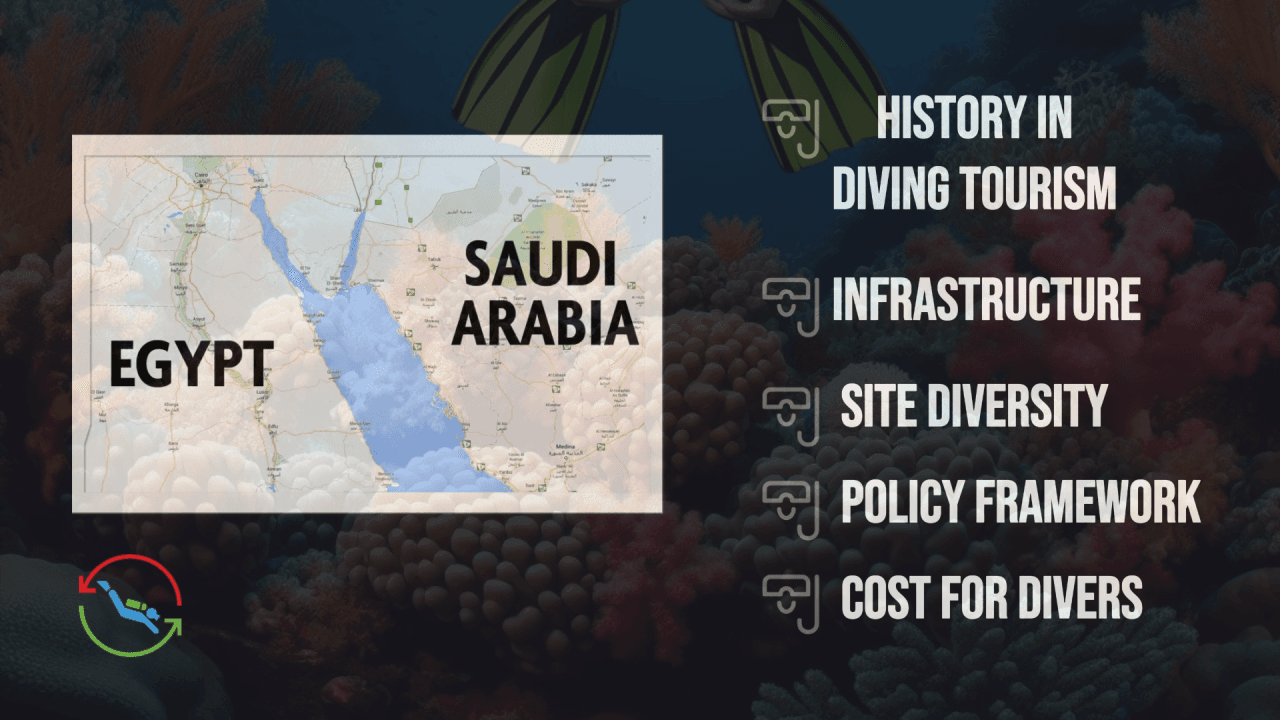
The Red Sea has long been at the heart of global dive tourism. Egypt has historically held the lead — with iconic dive sites, established infrastructure, and broad international appeal.
However, Saudi Arabia is rapidly investing in tourist infrastructure, sustainability, and marine experiences under Vision 2030, becoming a strong challenger in the region.
This article provides an updated comparative analysis between the two countries with recent market data, strategic drivers, challenges, and future implications for dive centers and operators.
Egypt's Position: Established Strengths & Market Momentum
Key Data & Trends
- Egypt welcomed ≈ 8.7 million tourists in the first half of fiscal year 2024/2025, up ~24% compared to the same period in the previous year.
- Total tourism revenue in 2024 reached USD 15.3 billion, a 9% year-over-year increase.
- The government aims for 17-18 million international tourists by end of 2025, leveraging continued growth in Red Sea resorts, Nile cruises, and major cultural landmarks.
Strengths in Dive Tourism
- World-renowned dive sites: Ras Mohammed, Sharm El-Sheikh, Blue Hole Dahab, Marsa Alam — all with long histories of attracting divers globally.
- Numerous internationally certified dive centers, experienced instructors, and established supply chains for equipment and services.
- Price competitiveness: Egypt remains more affordable in many respects (lodging, diving packages, charter boats) compared to some luxury-oriented new developments.
- Depth of local knowledge: guides, marine ecology, marine conservation programs already in place, which helps preserve reef health and divers’ credibility.
Saudi Arabia’s Rising Challenge: Investments & Vision 2030
Strategic Initiatives & Infrastructure
- Flagship projects: Red Sea Global, AMAALA, etc., are being developed with luxury, sustainability, and marine conservation central to their design.
- Digital infrastructure & smart destination planning: For example, Red Sea Global secured SAR 1.2 billion (≈ USD 320-330 million) investment from STC group for digital transformation across its Red Sea and AMAALA resort destinations.
- Inclusive, high standard dive operations: Saudi has established PADI Adaptive Service Dive Centres — infrastructure built for accessibility and higher safety / inclusivity standards.
Opportunities
- Untapped high-end luxury dive customers looking for premium experiences with sustainability credentials.
- Strong government backing and relatively large funding for infrastructure and promotion under Vision 2030.
- Ability to build from more recent technologies and sustainable practices (e.g. eco-friendly reefs, controlled visitor flow) rather than retrofitting legacy systems.
Challenges & Risks for Both Countries
| Country | Key Challenges |
|---|---|
| Egypt | Need to further modernize infrastructure (boats, safety, accessibility), address environmental pressures (reef degradation, pollution), improve ease of travel (visa, flight connections), and assure consistent quality and safety standards to match luxury-market expectations. |
| Saudi Arabia | Must build international reputation in diving, gain trust among seasoned divers, develop sufficient local human resources (experienced instructors, ecological experts), ensure ecosystem protection while scaling tourism, prevent overdevelopment that could damage reefs. |
Future Projections & Implications for Dive Centers
- Raising the bar of service quality: As Saudi develops luxury and sustainability focused dive tourism, Egyptian dive centers will need to enhance guest experience, safety, and environmental responsibility even more to maintain competitive edge.
- Diversification of dive packages: Liveaboards, adaptive diving, technical diving, underwater photography, eco-tourism, conservation journeys will be differentiators.
- Technology & digital operations adoption: Dive centers will benefit from tools to automate bookings, records, safety checks, environmental monitoring, competitive marketing.
- Sustainability becomes central: Reef restoration, marine protection zones, minimizing carbon footprints for dive boats, waste management will become not just nice to have—but required by markets and regulators.
Strategic Recommendations for Dive Center Operators
- Invest in safety & certification standards — ensure dive operations align with global safety/accreditation bodies (e.g. PADI, SSI), adaptive capabilities, transparent practices.
- Upgrade guest experience — focus on personalized services, immersive marine education, excellent equipment maintenance, high-quality logistics.
- Forge partnerships — collaborate with luxury resort developers, conservation NGOs, airlines and tourism agencies to attract high-value divers.
- Digital & operational excellence — use software for efficient operations, marketing, customer retention, sustainability reporting.
- Focus on sustainability — adopt reef-friendly practices, minimize environmental impact, engage in restoration and protection projects — this enhances reputation globally.
Why This Competition Matters for the Global Dive Industry
- Increased competition between Egypt and Saudi Arabia can benefit divers through more options, better services, innovation in diving experiences, and more sustainable practices.
- Dive tourism in the Red Sea region has potential to grow significantly — for both eco-conscious travellers and luxury seekers.
- The region can become a global benchmark for balancing marine conservation, luxury tourism, and community development.
Who Holds the Edge — Now and Going Forward
Egypt remains strong due to its deep experience, diverse dive sites, price advantage, and international recognition. Saudi Arabia, however, is on a fast trajectory, especially in high-end, sustainable, and inclusive dive tourism.
The real winners will be dive operators and centers that anticipate the future — those that enhance safety, adopt digital tools, prioritize environmental health, and tailor experiences to evolving diver expectations.
For those who adapt — there is ample opportunity to grow, thrive, and redefine what Red Sea diving can mean in the next decade.
If you run a dive center or are involved in dive tourism, now is the time to gear up. Whether you are in Egypt, Saudi Arabia, or elsewhere in the Red Sea region — you need the right strategy, tools, and partner to stay ahead.
Request a Demo of Anchor today and see how you can empower your dive center with the insights, automation, and sustainability leadership required for tomorrow’s competitive world.