Workshop Logic Built for
Rental Economics.
Generic workshop systems focus on repair completion. FleetFix focuses on asset productivity—prioritizing vehicles based on revenue impact, availability pressure, and business rules so every workshop decision protects yield, working capital, and long-term asset value.
Efficiency Gain
Rental Fleet Maintenance is a Capital Discipline, Not a Service Cost Center
Car rental operators manage high-value assets running at maximum utilization across multiple locations. At enterprise scale—20,000, 40,000, or 60,000 vehicles—workshop performance directly determines fleet availability, daily revenue capture, and the amount of capital tied up in non-productive assets.
Pending Volume = Locked Working Capital
FleetFix makes the cost of “Pending” visible. Every idle vehicle is treated as tied-up capital and lost earning potential, giving executives a clear, real-time view of how workshop delays impact cash flow and yield.
Availability Drives Revenue
Every additional day a vehicle remains in the workshop reduces billable days. Repair cycle time (MTTR) directly impacts fleet availability, revenue capture, and branch-level performance.
Lifecycle Capital Protection
Consistent, traceable maintenance protects resale value. Gaps in documentation and uncontrolled repairs reduce residual value and directly affect asset-level ROI at disposal.
Pending as Opportunity Cost
Without structured prioritization, Pending vehicles accumulate. Each idle unit represents lost revenue today and increased pressure on working capital tomorrow.
Governance as a Control Lever
At enterprise scale, workshop operations become a financial control function. FleetFix replaces reactive decision-making with structured, rule-driven oversight aligned to business performance targets.
Traditional Workshop Systems Do Not Align with Rental Economics
Most workshop management systems are designed for general automotive service, where technician productivity and job completion are the primary KPIs. In rental operations, those metrics are secondary to fleet availability, revenue yield, and capital protection.
Legacy Logic
FIFO Processing
Job cards move in arrival order. High-revenue vehicles can wait behind lower-impact repairs, reducing daily revenue capture.
Static Rules
Service standards applied uniformly, ignoring seasonal demand, asset class, or resale timing.
Output Focus
Reporting emphasizes technician productivity without measuring the financial cost of vehicle downtime.
Heuristic Engine
FleetFix Outcome
Heuristic Flow
Repair sequencing dynamically prioritizes vehicles based on revenue impact, branch utilization, and real-time demand signals.
Adaptive Standards
Maintenance thresholds recalibrate based on utilization peaks, contract obligations, and resale value objectives.
Capital Visibility
Executive dashboards track Days Pending as a direct indicator of tied-up capital and lost revenue potential.
FleetFix transforms the workshop from a reactive repair unit into a structured engine for revenue protection and capital control.
Native Support for Diversified Vehicle Usage Models
Enterprise rental operators manage multiple vehicle categories under different commercial models. FleetFix supports each usage model with dedicated rules, prioritization logic, and governance controls—ensuring every vehicle is managed according to its revenue model and business objective.
Fleet Vehicles
High-utilization daily rentals where speed of repair directly affects billable days. Prioritization focuses on reducing downtime to maximize revenue-ready fleet capacity.
Lease Vehicles
Long-term corporate contracts requiring strict SLA adherence, preventive maintenance planning, and protection of residual asset value.
Staff Vehicles
Internal-use vehicles where cost discipline, approval control, and budget governance take priority over revenue-driven availability.
LCO (Change-Over)
Temporary replacement vehicles supporting lease clients. Prioritization balances customer continuity commitments with controlled asset exposure and cost management.
Private Vehicles
Customer-owned units managed in the same ecosystem, enabling unified workshop coordination without fragmentation.
Centralized governance across multiple brands, with localized rules and accountability at each operational node.
The Linear Trap vs. Heuristic Flow
Standard maintenance systems operate on a First-In, First-Out (FIFO) basis. For rental enterprises, this creates an "Economic Blindspot"—treating a high-revenue luxury vehicle and a low-impact staff vehicle with the same priority.
Static Queueing
Workshops operate in isolation, unaware of branch demand or revenue impact. Priority is dictated by "Arrival Time", leading to high-revenue vehicles sitting idle while low-impact repairs consume bay capacity.
- No linkage to vehicle revenue contribution
- No visibility into branch utilization pressure
- Uniform SLAs across different asset classes
- Reactive scheduling based on backlog, not business impact
Context-Aware Prioritization
FleetFix dynamically re-ranks the workshop queue in real-time. It injects external business variables into the maintenance workflow to ensure the next "Spanner Turn" always generates the highest possible ROI.
- Revenue-based prioritization of high-impact vehicles
- Escalation rules aligned with branch utilization targets
- Availability thresholds defined by asset class
- Automated prioritization across multiple vehicle usage models
Weighted Decision Visibility
Our interface doesn't just present a list—it exposes the Decision Logic. Workshop managers see real-time signals pulled from branch utilization and revenue data, explaining exactly why the queue has been reranked.
Learn more about our Heuristic Model →Multi-Node Architecture Aligned with Enterprise Operations
Large rental groups operate across multiple branches, regions, and brands, often sharing workshops and inventory infrastructure. FleetFix supports this structure directly—providing centralized visibility and control without requiring manual reporting or system workarounds.
Enterprise Level
Central executive oversight with consolidated P&L visibility, cross-branch performance comparison, and enterprise-level KPI monitoring.
Branches & Regions
Operational units with independent revenue targets, utilization benchmarks, and branch-specific availability controls.
Shared Workshops
Service centers supporting multiple branches with automated cost allocation and shared technician management.
Decoupled Stores
Inventory management with centralized capability, localized issuance, and full parts traceability across branches.
Shared Workshop Capability
Operate shared service centers that support multiple profit centers with automated inter-branch cost allocation and financial transparency.
Role-Based Access Control
Granular access control aligned with enterprise hierarchy—define permissions by brand, region, branch, or individual operational node.
Multi-Brand Cohesion
Operate distinct rental brands while centralizing shared workshop and infrastructure resources under unified governance.
Real-Time Consolidation
Real-time data consolidation across all nodes, providing C-suite visibility into cost drivers, utilization, and performance metrics.
Architected by Industry Leadership
FleetFix was shaped in collaboration with senior rental executives, strategy advisors, and enterprise security architects to ensure the platform aligns with real-world operational, financial, and governance requirements.

“Rental workshop performance is not simply about fixing vehicles. It is about protecting fleet value and enforcing availability discipline. Systems must align with business reality—not impose generic service models.”
Eng. Mamdouh Azim
Former Maintenance Manager—Budget Rent a Car (KSA)

“Enterprise fleet management succeeds when operational activity translates directly into P&L performance. We ensured the system’s KPIs align with long-term profitability, capital efficiency, and asset sustainability.”
Prof. Dr. Samir Hasan
Business Strategy & Automotive Consultant—Leadership Hub
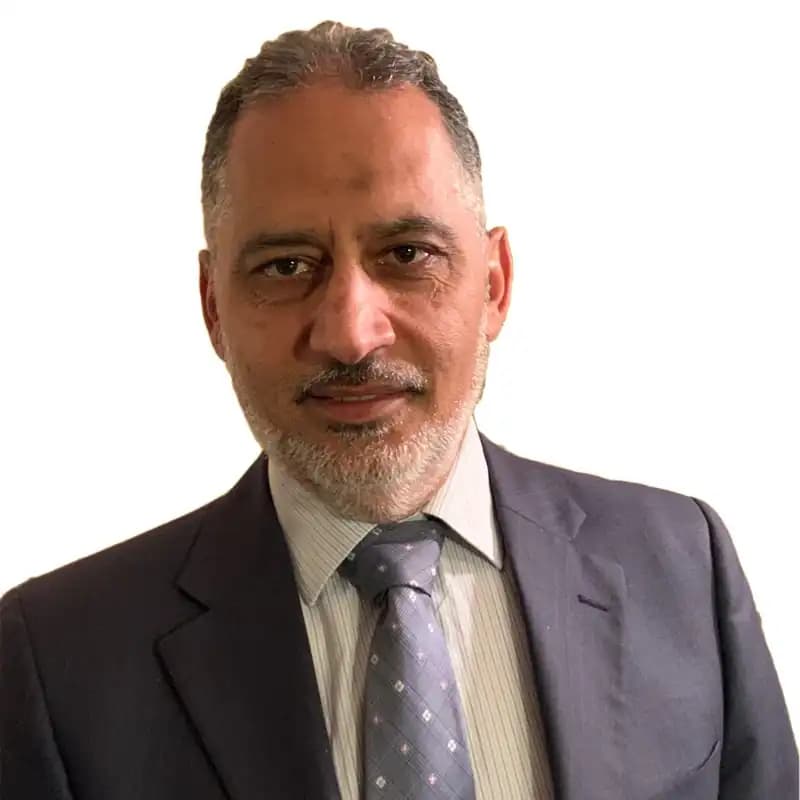
“For enterprise adoption, security isn't a feature—it's the foundation. We oversaw the system architecture to ensure the platform is built on scalable, secure layers capable of supporting global operations.”
Eng. Magdy Sharawy
Chairman & Technology Architect—TrustSEC
Evaluate FleetFix Within Your Rental Operating Model
Schedule a focused demonstration aligned with your fleet size, usage mix, and organizational structure. We will map FleetFix directly against your Pending levels, availability targets, and operational KPIs.