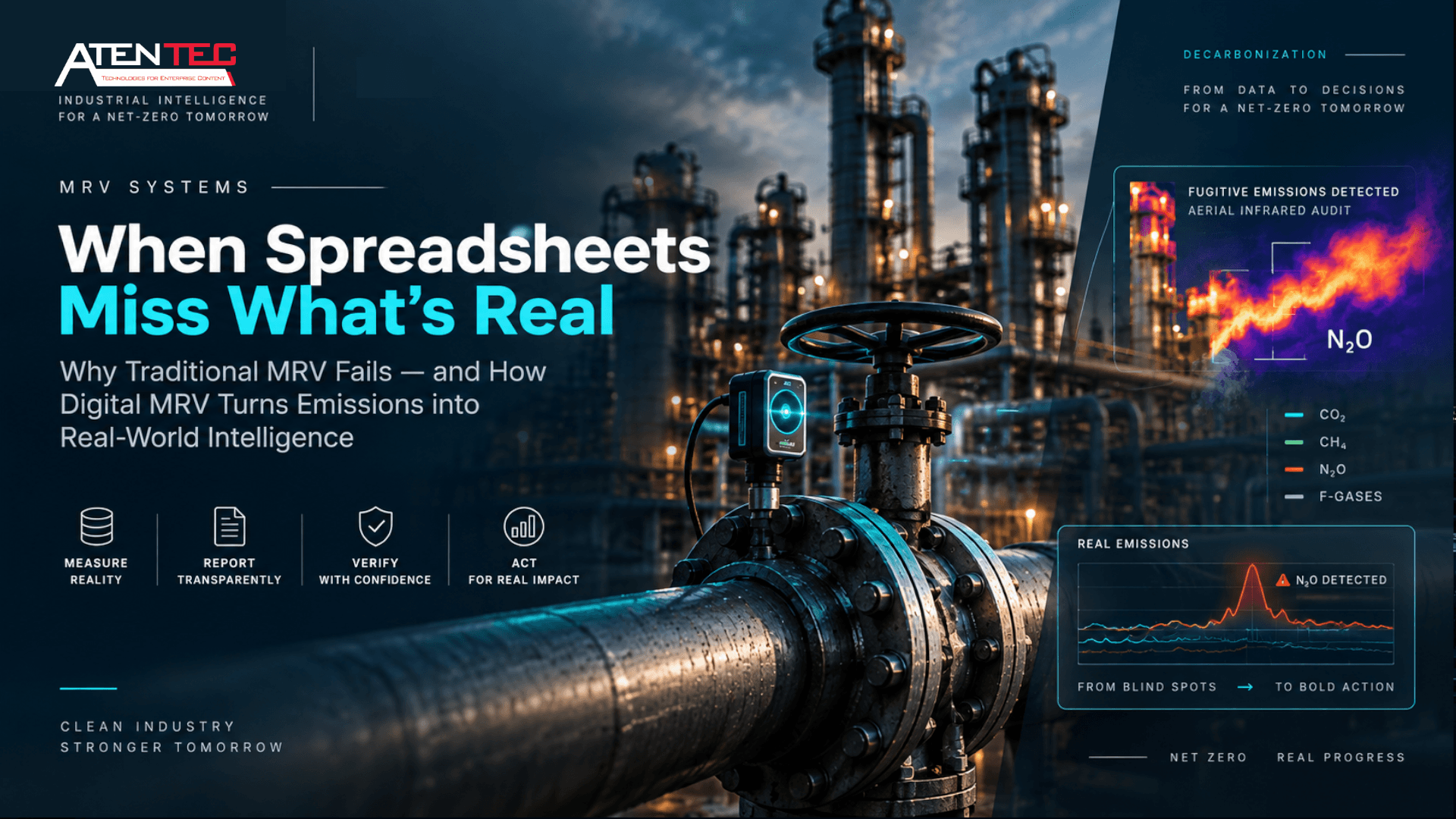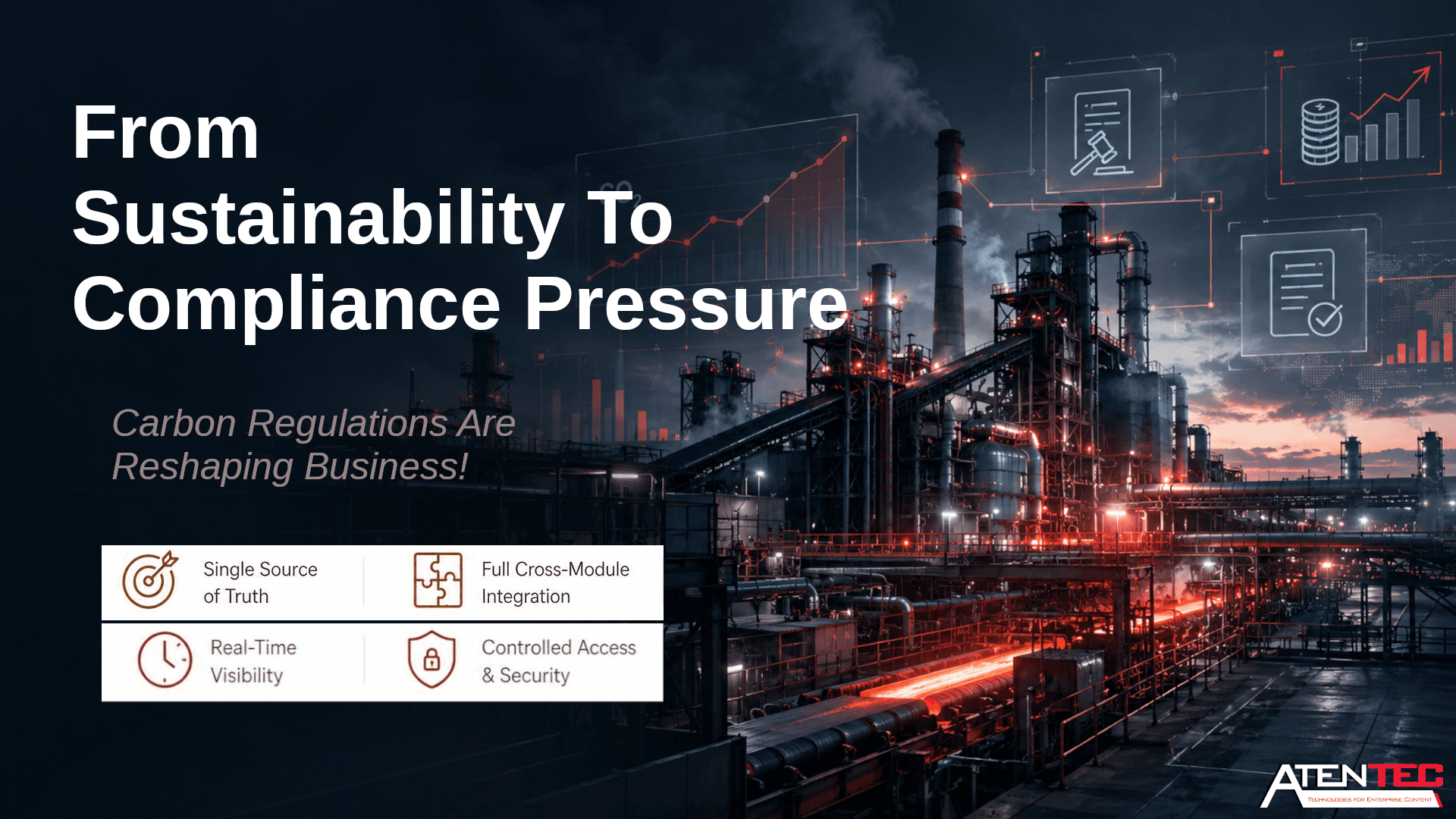
Carbon Regulations Are Reshaping Business: From Sustainability to Compliance Pressure
Carbon is no longer just something companies measure to demonstrate their environmental commitment. It is becoming a factor that influences how businesses calculate costs, manage risk, and compete in international markets.
For years, many organizations approached carbon reporting as a sustainability exercise. Emissions were calculated, figures were consolidated into annual reports, and reduction targets were incorporated into broader environmental strategies. The process was often treated as separate from the systems used to manage production, finance, and commercial performance.
That separation is becoming increasingly difficult to maintain.
As carbon taxes, emissions trading systems, the Carbon Border Adjustment Mechanism (CBAM), and ESG reporting frameworks reshape the regulatory landscape, emissions data is taking on a different role. It is no longer simply a record of environmental impact. Depending on the applicable framework, it can influence financial liabilities, reporting obligations, market access, and the ability to demonstrate compliance.
For industrial companies in particular, this creates a fundamental challenge: the quality of carbon data can directly affect the quality of business decisions.
When Carbon Becomes a Business Cost
Regulation changes the way companies think about emissions because it connects environmental performance to economic consequences.
Consider a manufacturer whose production process generates significant carbon emissions. If those emissions are measured inaccurately, the problem extends beyond an incorrect sustainability report. The company may misunderstand its actual carbon intensity, underestimate its exposure to carbon-related costs, or make investment decisions based on incomplete information.
The consequences depend on the regulatory framework, the company's activities, and the quality of its underlying data. But the underlying principle is consistent: when emissions become part of a financial or regulatory calculation, measurement is no longer a purely technical exercise.
Carbon pricing mechanisms illustrate this shift clearly. A carbon tax assigns a cost to covered emissions, while an emissions trading system (ETS) operates through a framework of emissions limits and tradable allowances. Although the mechanisms differ, both make the relationship between emissions data and financial performance more direct.
This changes the questions businesses need to ask. Instead of focusing exclusively on how much carbon they emit, they must also understand where those emissions originate, how reliably they are measured, and how changes in production could affect their exposure.
A company cannot manage a cost accurately if it cannot measure the variable driving that cost.
Carbon Tax and ETS: Different Mechanisms, One Data Challenge
Carbon taxes and emissions trading systems are often discussed together because both put an economic value on emissions. However, they do so through different mechanisms.
A carbon tax establishes a price for covered emissions under the relevant tax rules. An ETS, by contrast, typically operates through a cap on emissions and a system in which allowances can be traded. The specific obligations, coverage, and compliance requirements depend on the scheme in question.
For businesses, understanding these distinctions is essential. The applicable mechanism determines how emissions translate into financial exposure, what must be monitored, and which operational changes may have economic value.
Yet the practical challenge begins before any calculation of cost or allowance requirements: the company needs a credible picture of its emissions.
Industrial emissions are not always static. Fuel quality changes, production rates fluctuate, raw materials vary, and equipment operates under different conditions. A reporting approach based primarily on generalized factors or infrequent averages may fail to capture these variations with sufficient detail.
That gap can make it harder to identify the real sources of emissions, evaluate the effect of operational improvements, or understand the financial implications of a change in production.
The issue is not simply whether a company has carbon data. It is whether that data represents its actual operations closely enough to support the decisions being made.
CBAM: When Carbon Data Reaches Across Borders
The Carbon Border Adjustment Mechanism (CBAM) introduces another dimension to the relationship between emissions and business performance.
For companies involved in relevant trade with the European Union, carbon information can become part of the requirements associated with covered imported goods. This makes emissions data relevant beyond the boundaries of the company that physically operates a production facility.
Manufacturers may need to provide information about the embedded emissions of their products, while importers and other parties have obligations determined by the applicable CBAM rules. The precise requirements depend on the product, reporting period, and regulatory provisions in force.
This creates a practical challenge for industrial supply chains. A company may understand its own production process but still struggle to produce reliable product-level emissions data if its calculations depend on incomplete supplier information, generalized assumptions, or disconnected reporting systems.
When actual emissions data is unavailable or insufficient, applicable rules may provide for the use of default values or other prescribed methods. Where those values are less favorable than a producer's actual performance, the resulting assessment can weaken the commercial position of that producer.
The strategic implication is significant. Carbon data is no longer relevant only to sustainability teams or environmental reporting. It can influence how suppliers demonstrate performance, how buyers evaluate sourcing options, and how manufacturers prepare for regulatory requirements in export markets.
In this environment, the ability to substantiate a product's carbon profile becomes part of a company's broader commercial readiness.
ESG Regulations: From Disclosure to Accountability
ESG regulations and reporting frameworks add another layer to the picture. They address how organizations disclose and communicate information about environmental, social, and governance matters, although the scope and legal status of individual requirements vary across jurisdictions and frameworks.
Carbon emissions are an important part of this landscape, but ESG reporting should not be treated as interchangeable with carbon taxation, emissions trading, or CBAM. These mechanisms serve different purposes and impose different kinds of obligations.
Their connection lies in the information organizations need to manage.
Reliable disclosures require consistent data, transparent methodologies, and a clear understanding of how reported figures were produced. When emissions information is collected separately by different departments, calculated using inconsistent assumptions, or stored without a traceable record of its origins, producing credible reports becomes more difficult.
The problem becomes even more complex when companies need to explain changes in emissions over time or reconcile reported figures with operational records.
A reporting framework can define what information is required, but it cannot automatically resolve weaknesses in the systems that generate that information.
That responsibility remains with the organization.
The Real Risk Is Not Regulation Alone. It Is the Data Behind Compliance.
Regulatory requirements often receive the most attention because they define deadlines, reporting obligations, and potential consequences. But focusing exclusively on the rules can obscure a more fundamental problem: compliance depends on the quality of the evidence used to demonstrate it.
Imagine a manufacturing facility that calculates emissions using periodic production data and standard emission factors. The resulting report may appear consistent, and its calculations may follow a documented methodology. However, if the underlying assumptions do not reflect important changes in fuel consumption, raw material composition, or production efficiency, the calculated result may not fully represent operational reality.
This distinction matters.
A calculation can be mathematically correct while still relying on incomplete inputs. A report can be professionally prepared while leaving gaps between reported estimates and the physical processes that generated the emissions.
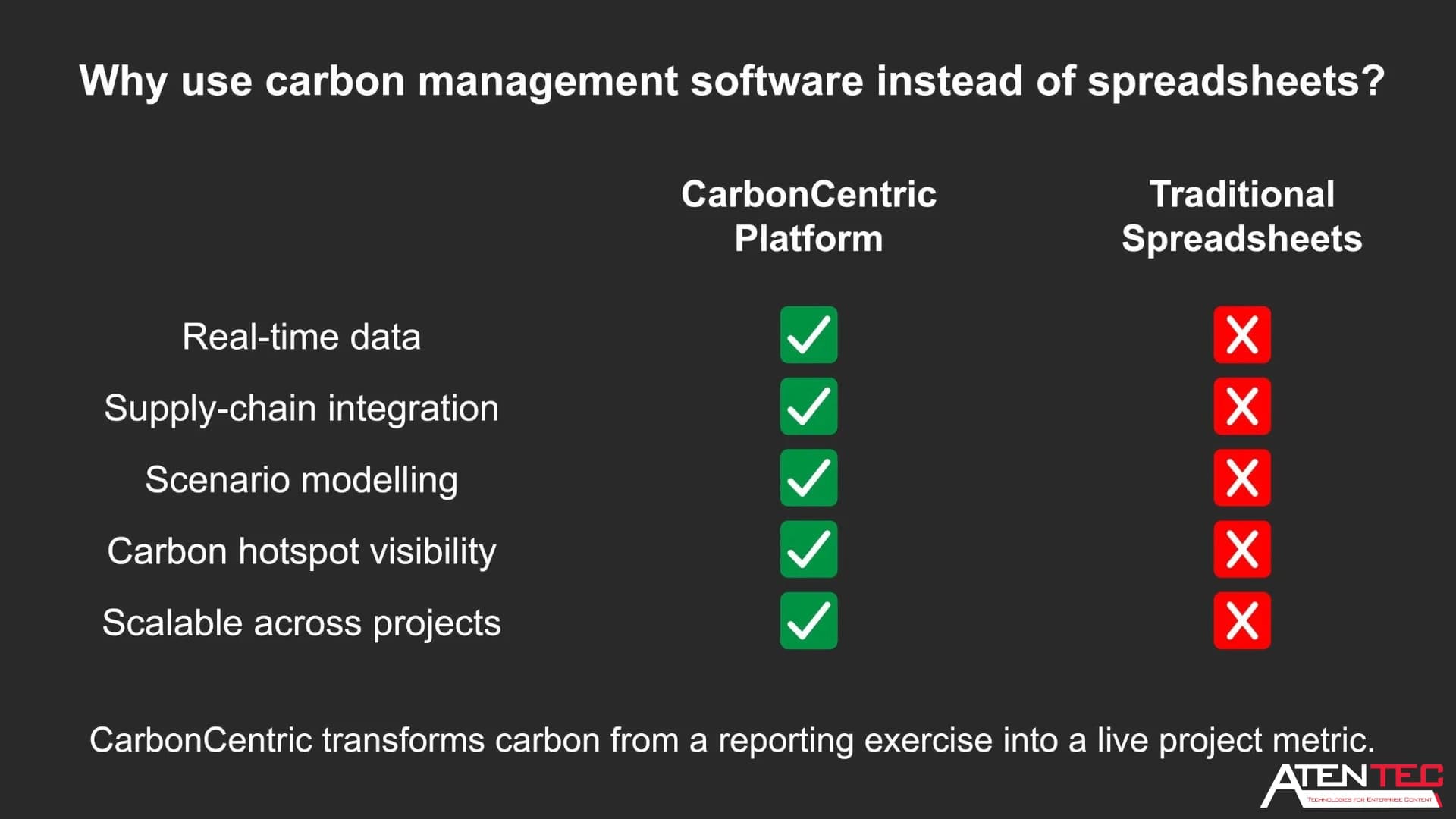
For organizations facing carbon-related obligations, those gaps can create uncertainty around reported performance, financial exposure, and the ability to substantiate their figures during verification or regulatory review.
The answer is not simply to produce more reports. It is to improve the relationship between operational data, emissions calculations, and the evidence retained to support them.
This requires companies to look beyond the final reported number and examine how that number was generated.
Where did the data originate? Which assumptions were applied? Can the calculation be traced back to its inputs? Does the methodology reflect the relevant production process? Can changes be explained and independently reviewed?
These are not merely technical questions. They are part of building a defensible approach to carbon compliance.
From Periodic Reporting to an Integrated Carbon Data System
Traditional carbon reporting often treats emissions as an output: data is collected, calculations are performed, and a report is produced at a particular point in time.
But the pressures created by regulation, production variability, and supply-chain complexity make this approach increasingly limited.
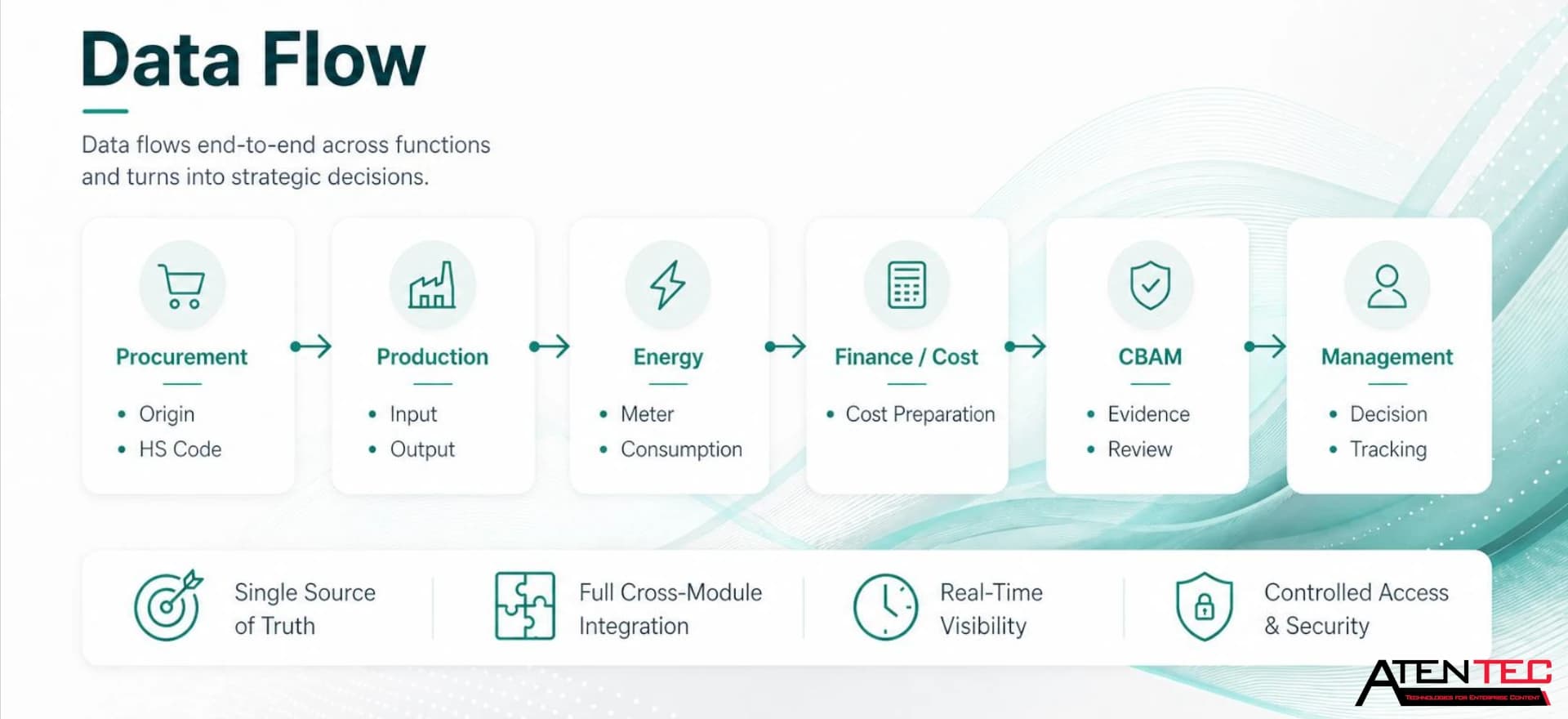
Companies need a way to connect the information generated across their operations with the calculations and evidence required for carbon management. That means integrating relevant data sources, maintaining traceability, applying appropriate calculation methodologies, and updating emissions information as operational conditions change.
It also means recognizing that different decisions require different levels of detail. A corporate-level inventory may serve one reporting purpose, while product-level embedded emissions or process-level analysis may require more granular data.
A useful system must preserve these distinctions rather than treating every emissions figure as interchangeable.
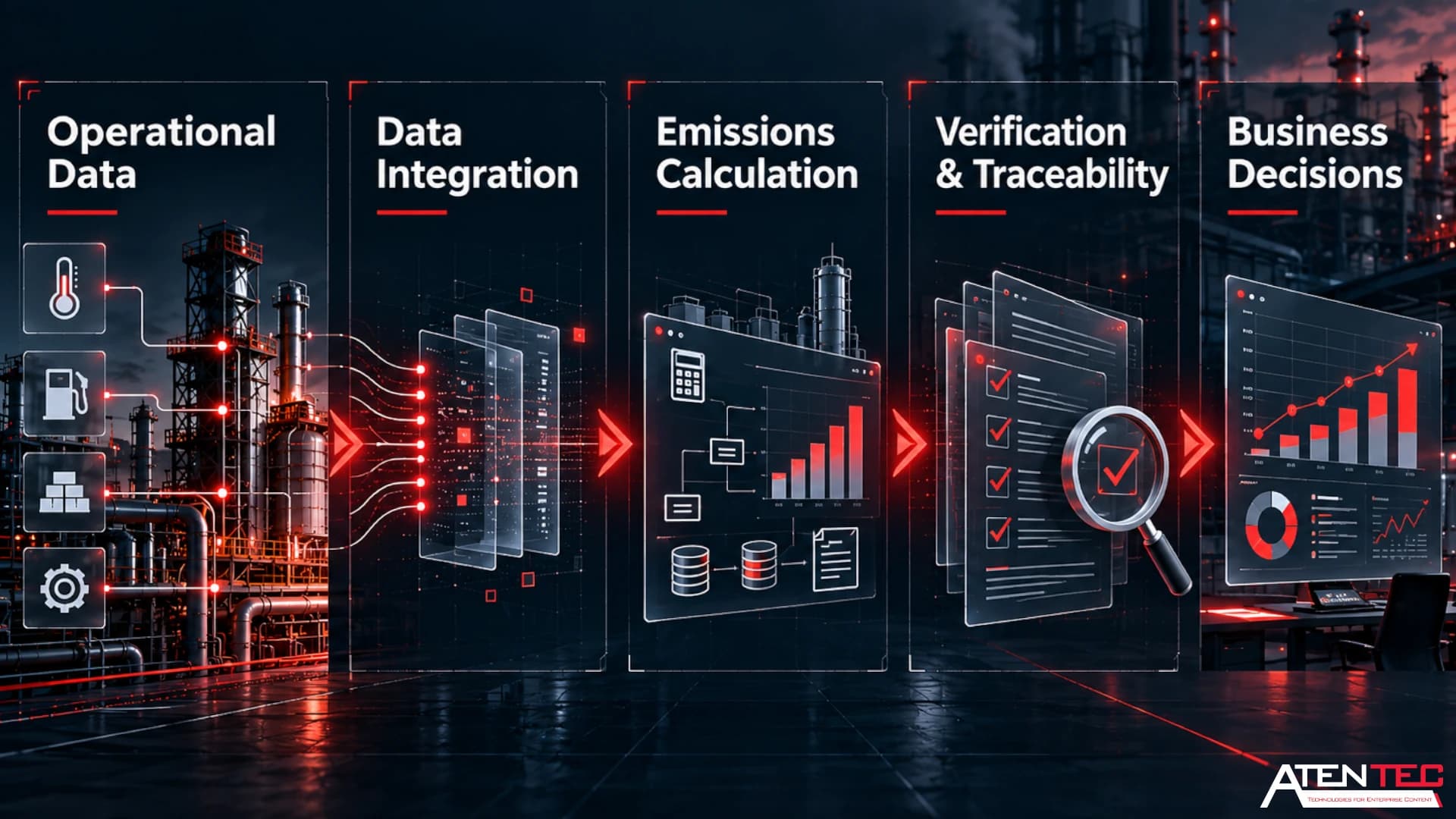
Technology can support this transition through data integration, automated calculations, digital Monitoring, Reporting, and Verification (MRV), and analytical tools that help organizations understand how operational changes affect emissions. However, technology alone does not guarantee accuracy. The quality of the result still depends on the underlying data, the methodology, and the way the system is designed and governed.
The objective is to make carbon information sufficiently reliable and traceable to support both compliance and operational decisions.
Instead of discovering discrepancies only when a report is prepared, organizations can work toward identifying data gaps earlier, understanding their causes, and evaluating the implications before those gaps become more difficult or expensive to address.
That is a more meaningful response to regulatory pressure than treating compliance as a task performed at the end of the reporting cycle.
Compliance Is Becoming an Operational Capability
The companies best prepared for carbon regulation will not necessarily be those that produce the largest number of reports. They will be those that understand the connection between their physical operations, their emissions data, and the requirements that apply to their business.
This requires cooperation across functions that have traditionally operated separately. Sustainability teams need information that reflects industrial reality. Finance teams need to understand how emissions affect costs and exposure. Operations teams need to identify where production conditions influence carbon intensity. Compliance teams need evidence that can support the organization's reporting and verification obligations.
When these functions work from fragmented information, carbon management becomes reactive. When they work from a consistent and traceable data foundation, the organization is better positioned to evaluate risks, explain performance, and make informed decisions.
Regulation, in this sense, is not simply adding another layer of reporting. It is exposing the limitations of treating carbon as an isolated sustainability metric.
The shift is from documenting emissions after they occur to managing emissions information as part of the operating system of the business.
The Strategic Question for Industrial Leaders
Carbon regulation is changing the relationship between environmental performance and commercial performance. Carbon taxes, ETS frameworks, CBAM, and ESG reporting requirements each approach the issue differently, but all reinforce the importance of understanding what a company emits and being able to substantiate the information it reports.
The practical response begins with a clear assessment of the requirements that apply to the business. From there, organizations need to evaluate whether their current measurement methods, data sources, and verification processes are adequate for those requirements.
The central question is no longer just whether the company measures its emissions.
It is whether the company can trust those measurements, trace them to their operational sources, and use them to understand the financial and regulatory consequences of its decisions.
At AtenTEC, this is the foundation of a systems-first approach to carbon intelligence: turning carbon emissions into an industrial data system that drives compliance, pricing, and operational decisions.
Because when carbon becomes a regulated business variable, data quality is no longer just a reporting concern. It becomes part of how a company protects its competitiveness.
Frequently Asked Questions (FAQs)
1. What are carbon regulations, and why do they matter for businesses?
Carbon regulations are rules and frameworks that govern how emissions are priced, monitored, reported, or managed. They matter because they can affect a company's compliance obligations, operating costs, reporting processes, and competitiveness in regulated markets.
2. What is the difference between a carbon tax and an emissions trading system (ETS)?
A carbon tax sets a price on covered emissions, while an emissions trading system typically establishes an emissions cap and allows regulated entities to trade emissions allowances. Both mechanisms can create financial incentives to reduce emissions, but their requirements and cost implications depend on the specific scheme.
3. What is CBAM, and which companies may be affected?
The Carbon Border Adjustment Mechanism (CBAM) is an EU mechanism addressing the carbon emissions embedded in certain imported goods. Its requirements can affect EU importers and businesses supplying covered products, depending on the applicable rules, product categories, and reporting obligations.
4. Why is accurate emissions data important for carbon compliance?
Accurate emissions data helps companies substantiate reported figures, assess potential carbon-related costs, and demonstrate compliance with applicable requirements. Incomplete or unreliable data can create reporting difficulties, weaken decision-making, and increase exposure to financial or regulatory risks.
5. How can companies improve their carbon compliance processes?
Companies can improve carbon compliance by identifying applicable regulations, strengthening emissions measurement methods, integrating relevant operational data, documenting calculation methodologies, and maintaining traceable evidence. Digital MRV and carbon data systems can support these processes when designed around reliable data and appropriate verification requirements.
Where This Leads Next in Our Knowledge Series?
Carbon regulations define the pressure businesses face, but understanding the rules is only part of the challenge. The next step is examining how these requirements translate into practical obligations across industrial operations and supply chains.
In the next articles in our Regulation Layer, we will explore the mechanisms shaping this transition in greater depth, starting with carbon tax architecture, followed by emissions trading systems (ETS), CBAM compliance, and ESG regulations and reporting frameworks.
Each article will examine how these mechanisms work, what they mean for businesses, and why reliable, traceable emissions data is essential to managing their implications.
Because understanding the regulation is only the beginning. Building the data infrastructure to respond to it is what makes compliance actionable.
Here is how our connected series unfolds:
Explore the Full Knowledge Architecture:
CARBON EMISSIONS DOMAIN
├── 1. Core Concepts 👉(Carbon Emissions Explained ✅) 👉
├── 2. Measurement Systems 👉 (Introduction to Measurement Systems)
├── 3. Regulation Layer 👉 (You are here)
│ ├── carbon tax 👉 (Next Article)
│ ├── ETS / cap and trade 👉 (Upcoming)
│ ├── CBAM compliance 👉 (Upcoming)
│ └── ESG regulations 👉 (Upcoming)
├── 4. Supply Chain Layer 👉 (Upcoming)
In our upcoming Regulation Layer series, we will examine how these measurement systems interact directly with legal and financial enforcement mechanisms—beginning with the strategic mechanics of Carbon Tax Architecture and CBAM Compliance.
As we promised from the beginning of this journey, we are unpacking each layer of the carbon domain not as static definitions, but as actionable operational frameworks.
Is your current MRV system providing genuine audit certainty, or is it masking structural data gaps?
Discover how the I-DNTITI Program and AtenTEC Emission Engine convert complex industrial telemetry into sovereign pricing intelligence and audit-ready compliance.
"We turn carbon emissions into an industrial data system that drives compliance, pricing, and operational decisions."